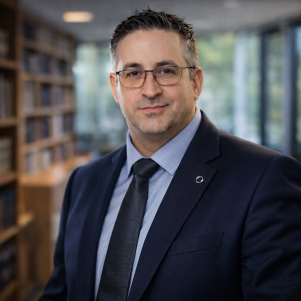
Bora Başaran is an Associate Professor of German Language Education at Anadolu University, Türkiye. His research focuses on artificial intelligence in education, technology-enhanced language learning, German as a foreign language, teacher education, and AI-supported assessment and feedback. His recent work examines human–AI collaboration in language education, AI attitudes and higher-order thinking, automated language assessment, and the pedagogical integration of generative AI. He also develops and evaluates AI-supported learning environments for speaking, writing, and research mentoring, with particular attention to teacher agency, learner autonomy, privacy, and responsible AI use. Alongside his research, he teaches undergraduate and graduate courses on German language teaching, digital pedagogy, and artificial intelligence in language education.
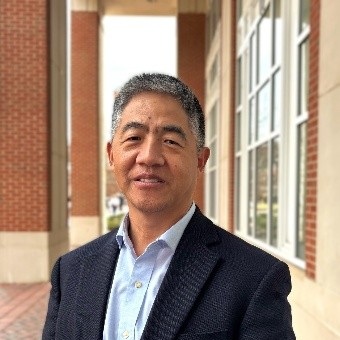
Dr. Chuang Wang is Chair Professor of Educational Research and Evaluation at the Faculty of Humanities of The Education University of Hong Kong (EdUHK), Director of the Center for Higher Education Leadership and Policy Studies at EdUHK, former Chair of the Department of Educational Leadership at the University of North Carolina at Charlotte, and former Dean of the Faculty of Education at the University of Macau. His research interests include self-efficacy beliefs, self-regulation, and use of AI in large data analysis. He has published 8 books, 22 book chapters, and over 200 peer-reviewed journal articles. He was listed as one of the world masters in English language education by China Daily and top 2% scientists worldwide by Stanford University. Professor Wang has also received awards in research, teaching, and service at the university level and academic associations such as American Educational Research Association, the U.S. Academy of Educational Leadership, the Association for Educational Communications and Technology, and the Chinese American Educational Research and Development Association. He served as the Editor-in-Chief of the Educational Research & Development Journal and the Journal of Applied Educational and Policy Research. He is Associate Editor of Psychology in the Schools and Sage Open.
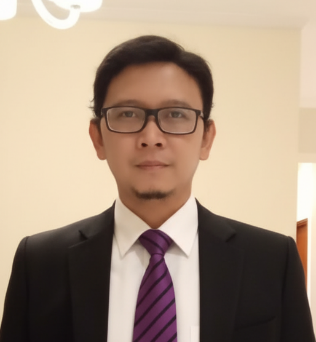
Thesa Kandaga is a lecturer and researcher in Mathematics Education at Universitas Terbuka, Indonesia. His academic and research interests focus on mathematical thinking and mathematical modeling, particularly on how learners develop, connect, and justify mathematical ideas through reasoning, representation, problem solving, and modeling. His research also examines technology-enhanced learning as an environment for supporting mathematical exploration and the development of learners’ ways of thinking. His recent work explores the integration of mathematical thinking, modeling, data, and AI-supported learning within technology-rich learning environments. Through this work, he seeks to understand how emerging technologies can extend learners’ mathematical capabilities while maintaining meaningful reasoning, critical evaluation, and mathematical justification.
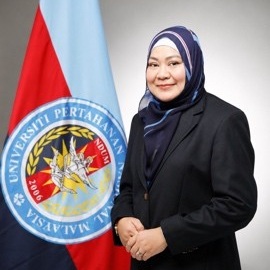
Jowati Juhary is an academic at the Language Centre of the National Defence University of Malaysia (UPNM) in Kuala Lumpur. She is currently the Dean of the Language Centre. She has a Bachelor of Education in Teaching English as a Second Language (B.Ed (TESL)), an MA in English Language Studies, and a PhD in Governance and Development. Her research centres on four core areas: first, educational technology; second, general teaching methods, namely pedagogy and military pedagogy; third, higher education; and fourth, language education related to English language teaching. As early as 2005, she published her first relevant study, which argued for the implementation of e-learning in Malaysia’s military academies. Over the nearly two decades since then, she has continuously published relevant articles, consistently exploring the impacts that technology has brought to teaching in military learning environments. Her specific research covers a wide range of topics, including the blended learning model; the development of e-learning content suitable for online teaching; and the learning management systems that universities use to uniformly manage courses, assignments, and grades, from the small-scale use of social media as a review tool for students to the application of blended teaching and the HyFlex model in the context of Industry 4.0 and the post-pandemic era, all of which fall within her research scope.
Dr. Fernando Martin was a Fulbright Fellow in Music in the USA and studied at the University of Washington, University of California, and Tanglewood Music Center in Massachusetts attending lectures with Yo-Yo Ma and John Williams. He later received the AHRB fellowship from the UK government and studied at King's College London (UK), Conservatorio Superior in Madrid (Spain), and IRCAM Centre Pompidou in Paris (France). He has published articles on Igor Stravinsky and has given talks at McGill University (Canada), University of Birmingham (UK), and the University of Cambridge.